This is a subjective question, but should is it good to always have MU-MIMO enabled on the 4k platform even if MU-MIMO is not happening very much, or would it be better in those cases to run just plain beamforming?
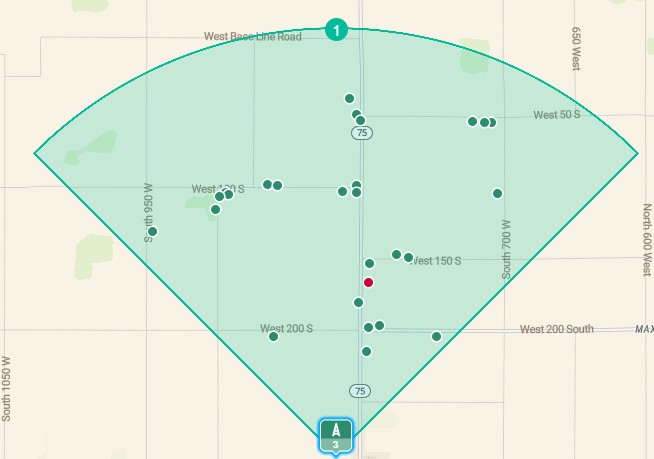
Example. I have an 4600 AP on 4x4 antenna with 27 clients. Map distribution seems to be pretty good for MU-MIMO to engage when needed. However I do have a large group of SMs that are in a vertical column (12 SMs) where MU-MIMO would not probably engage.
I check the AP during peak usage hours and MU-MIMO accounts for around 1% or less of all DL traffic, so under normal client usage right now MU-MIMO rarely engages. I can force MU-MIMO in testing with the AP multi-sm link test (randomly selecting 4 SMs) and I can get it to 50% or greater of the DL traffic of the test is MU-MIMO.
On this AP am I losing anything by having MU-MIMO enabled? Could performance be better with just beamforming? Since MU-MIMO is not actually happening much is the AP just running with regular beamforming anyway and it would not really be any difference between the AP having beamforming on vs MU-MIMO?
When I started deploying 4600 APs MU-MIMO was not ready in the FW so I have most of my APs set to beamforming only. New APs I have put up since 5.10 are running with MU-MIMO on by default. Should I go back to my other APs and switch to MU-MIMO or leave them on plain beamforming?
By having MU-MIMO enabled, you’re enabling both beamforming and the possibility of MU-MIMO. When MU-MIMO is not triggered, beamforming is being used to increase gain by 3dB.
The only downside is that when MU-MIMO is being triggered, you don’t get the 3dB downlink beamforming gains. For the 4600 4x4, that might not be a huge deal, but for the 4500 integrated 8x8 AP, which has 6dB of beamforming gain, this could result in a pretty big difference between downlink modulation and MCS %’s when beamforming is in use VS. MU-MIMO. Until MU-MIMO on e4k is better optimized (like in upcoming 5.11), there may be instances where there is higher overall downlink AP capacity/performance with just beamforming enabled all the time.
The reason I kind of asked this is I have 2 APs I am comparing. One AP with 19 client and the other with 27. The 19 client AP is beamforming only and the 27 client AP is MU-MIMO. All other TDD settings and channel sizes are the same.
I have been doing some recent tests and it seems to me the 19 client beamforming only AP has more consistent and predictable performance vs the MU-MIMO AP. What I mean is that during periods of heavier AP load the beamforming AP clients get more consistent speed tests vs the MU-MIMO AP.
I know this is not a controlled test as client counts, signals, and usage patterns are not identical. However even with periods of lower load on the 27 client AP, the customer bandwidth tests (both link test and TCP testing from customers Mtik router) seem to show DL bandwidth as less consistant than the 19 client AP.
I am planning on turning MU-MIMO off on the 27 client AP to see if this plays any factor in the difference between the APs. I would think 8 more clients would not be that big of a factor, but I am still new to Cambium as I am used to Ubiquiti AirmaxAC and how it works/performs for TDD.