One fundamental difference is that the radio is versatile depending on the scenario. It can function as an AP (PtP or PtMP) or an SM (PtP or PtMP); that is why it offers both TDD and TDD PtP modes.
If you look at a radio designed exclusively for PtP, you will see that it offers more than just TDD PtP or AP TDD modes.
When you configure a radio as an AP TDD, you are instructing the AP to schedule its radio resources to serve multiple SMs under varying conditions, such as:
- different MCS
- different SNR
- different traffic volumes
- different signal losses
- different priority levels
- different speed limits
- different distances
- different interference conditions
- etc.
In fact, such a radio—like the PMP3000—is more robust, physically larger, and equipped with more memory and processing power, yet it is limited to the AP TDD mode.
When you configure it for TDD PtP, you are telling the AP to serve only a single SM. The system has a much better understanding of the link’s status.
It does not have to share radio resources with 20, 30, or 50 other SMs.
- same link
- same RF conditions
- same SNR
- same MCS
This allows it to optimize the frame for the throughput and latency of that single link.
The ePTP mode is even more specialized for PtP:
- single link
- algorithm optimized specifically for PtP
- minimal latency
- no GPS sync
TDD PtP exists not merely to “perform PtP,” but to allow that PtP link to function as a synchronized member of a TDD network.
This is precisely what makes TDD PtP a much more attractive option than ePTP when you have multiple ePMP units on the same tower.
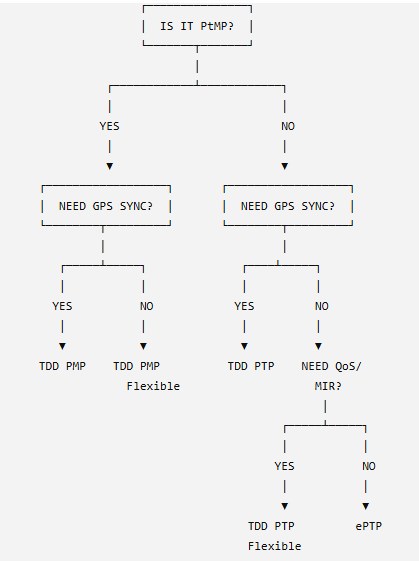
image 1
GPS Sync is not used to directly improve signal, MCS, or range. It is primarily used to COORDINATE TRANSMIT/RECEIVE TIMING between TDD radios and reduce interference between them.
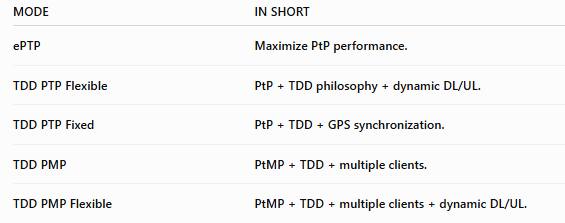
image 2
a short sentence:
ePTP → PERFORMANCE for PtP
TDD PTP Flexible → PtP + TDD + DYNAMIC DL/UL
TDD PTP Fixed → PtP + TDD + GPS SYNC
TDD PMP → MULTIPLE CLIENTS + TDD
TDD PMP Flexible → MULTIPLE CLIENTS + TDD + DYNAMIC DL/UL
Grades: