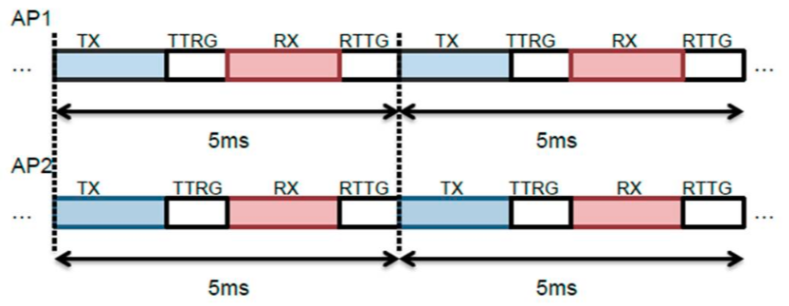
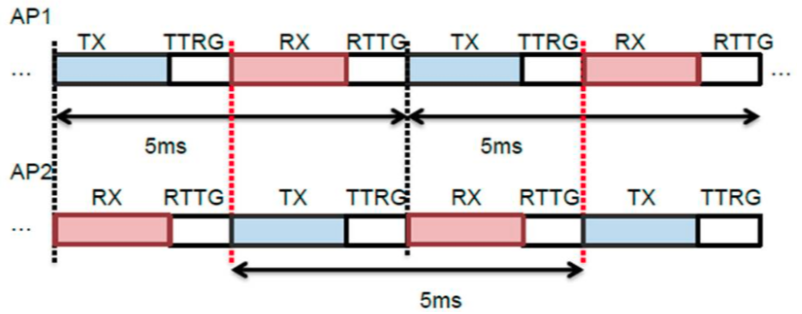
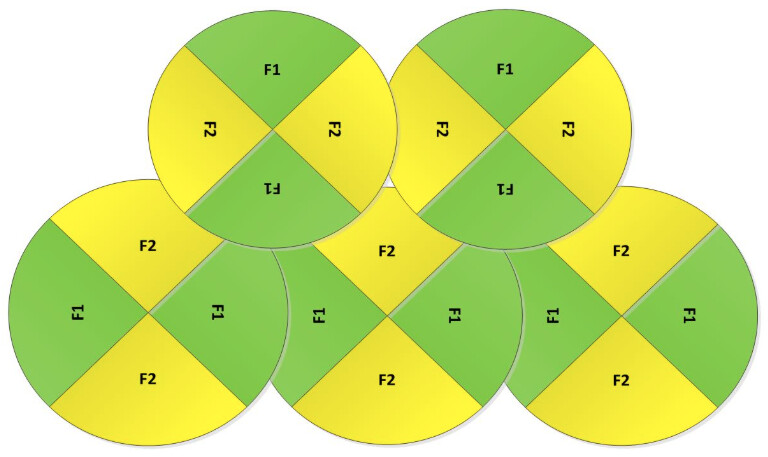
Cambium ePMP radios employ Time Division Duplex (TDD), dividing each frequency channel into discrete downlink and uplink slots. Without synchronization, each Access Point (AP) determines its transmit timing independently. In multi-AP environments, this results in self-interference: the transmit cycle of one AP overlaps with the receive cycle of a neighbouring AP, degrading uplink performance and preventing effective frequency reuse. TDD synchronisation eliminates this by aligning the transmit and receive windows of all APs across the network to a common timing reference, ensuring no AP transmits while another is receiving.
GPS Synchronization
The primary timing reference is the GPS one pulse per second (1PPS) signal, derived from atomic clocks aboard GPS satellites. Each GPS-synchronized AP locks to this signal as the reference for TDD frame start. Since all APs share the same global timing source, transmit and receive windows align precisely across the network regardless of physical separation.
Effective synchronization requires consistent frame parameters across all co-located and co-channel APs: identical frame size, a fixed DL/UL ratio (75/25, 50/50, or 30/70 — the Flexible ratio is incompatible with GPS sync), and the same Max Range setting. Subscriber Modules (SMs) do not require independent GPS receivers; they derive timing directly from the AP downlink frame.
Synchronized APs
Unsynchronized APs
Frequency reuse pattern
Synchronisation Source Modes
Three synchronisation source modes are available in the ePMP GUI under Configuration > Radio > Synchronisation:
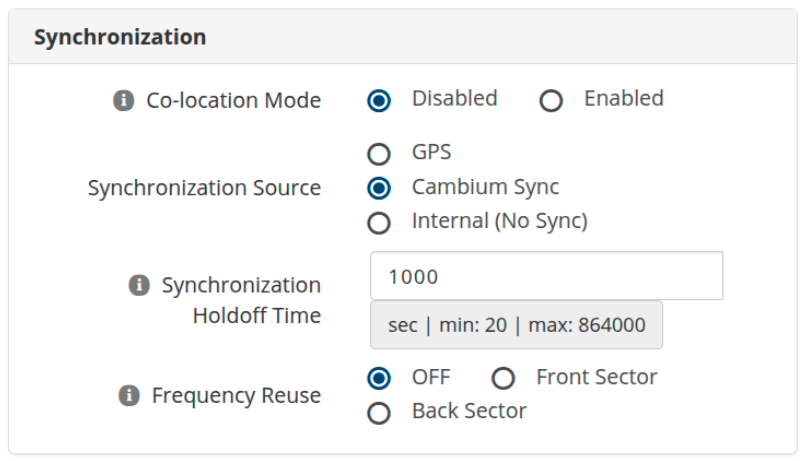
- Internal GPS: The AP uses its onboard GPS receiver as the timing reference. An external GPS puck antenna may be connected to improve satellite acquisition.
- Cambium Sync: The AP receives its timing signal from an external sync distribution device via the Ethernet port. Used where the radio lacks GPS signal from on board module or where centralised sync distribution is required.
- Internal (No Sync): The AP operates from an internal free-running clock with no GPS reference. This mode is not synchronised and must not be used in co-located or frequency reuse deployments. It is suitable only for standalone single-AP installations or when the Flexible DL/UL ratio is in use.
Device GPS Capabilities
GPS hardware varies across the ePMP product range. The following summarises the GPS configuration for each access point model:
| Model | GPS Hardware | Sync Support | Notes |
|---|---|---|---|
| ePMP 4500 | Built-in GPS receiver; external puck antenna | Internal GPS, Cambium Sync | |
| ePMP 4500C | Built-in GPS receiver; external puck antenna | Internal GPS, Cambium Sync | |
| ePMP 4500L | Built-in GPS receiver; external puck antenna | Internal GPS only | Cambium Sync is not supported |
| ePMP 4600 | Built-in GPS receiver; external puck antenna | Internal GPS, Cambium Sync | |
| ePMP 4600L | Built-in GPS receiver; external puck antenna | Internal GPS, Cambium Sync | |
| Force 4600C | Built-in GPS receiver; external puck antenna | Internal GPS, Cambium Sync | |
| Force 4616 | Built-in GPS or external USB GPS receiver | No TDD synchronization support | In FCC region, GPS used only for AFC |
| Force 4625 | External USB GPS receiver | No TDD synchronization support | In FCC region, GPS used only for AFC via external USB module |
External Sync Distribution Hardware
Where radios lack integrated GPS, or where a single site-wide timing reference is preferred, Cambium Networks provides dedicated sync distribution hardware. These devices receive the GPS signal and distribute Cambium Sync to connected radios over Ethernet.
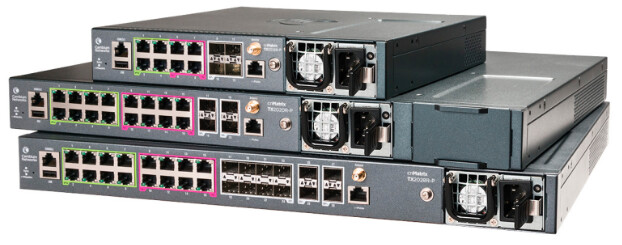
Current: cnMatrix TX2000 Series
The cnMatrix TX2000 series managed switches incorporate an internal GPS module and deliver Cambium Sync on a per-port basis. This enables a single GPS receiver to provide accurate timing to all APs connected to the switch, irrespective of whether the individual radio has its own GPS capability.
Legacy Devices
The cnPulse (standalone GPS sync distribution unit) and CMM5 — Cluster Management Module (combined power and sync distribution) were previous-generation solutions for site-wide timing distribution. Both are superseded by the cnMatrix TX2000 series but may still be present in existing deployments.
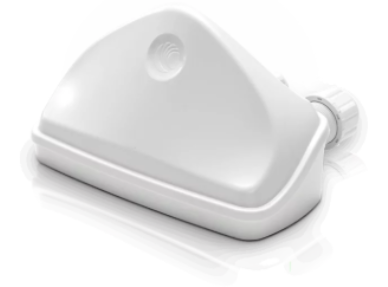
cnPulse
cnPulse is deployed in-line with the radio’s CAT-5 drop cable. cnPulse receives power (and data) from the ODU’s PoE power injector and then outputs PoE+Data+CambiumSYNC to the main input on a radio.
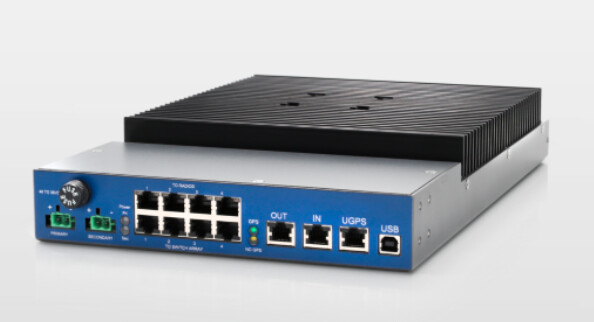
CMM5
The CMM5 is a modular design with individual 4-port power injectors and an optional controller used for remote management.
cnMaestro Template
{
  "device_props": {
    "wirelessInterfaceColocState": "0",
    "wirelessInterfaceSyncSource": "3",
    "wirelessInterfaceSyncHoldTime": "1000",
    "wirelessInterfaceiFreqReuseMode": "0"
  }
}
MIB objects
wirelessInterfaceColocState  OBJECT-TYPE
	SYNTAX     Integer32 (0|1)
	MAX-ACCESS read-write
	STATUS     current
	DESCRIPTION
		"Co-location state
			0 - disabled
			1 - FSK co-location
		Device Allocation: AP"
	DEFVAL  { 0 }
	::= { wirelessInterface 59 }

wirelessInterfaceSyncSource	 OBJECT-TYPE
	SYNTAX	   Integer32 (1|2|3|4|5)
	MAX-ACCESS read-write
	STATUS	   current
	DESCRIPTION
		"1PPS Sync Source
			1 - GPS,
			2 - CMM4,
			3 - Internal Free Run,
			4 - CMM3,
			5 - CMM5
		Device Allocation: AP"
	DEFVAL	{ 3 }
	::= { wirelessInterface 14 }

wirelessInterfaceSyncHoldTime  OBJECT-TYPE
	SYNTAX	   Integer32 (20..864000)
	MAX-ACCESS read-write
	STATUS	   current
	DESCRIPTION
		"GPS Sync Hold Time in seconds
		Device Allocation: AP"
	DEFVAL	{ 30 }
	::= { wirelessInterface 15 }

wirelessInterfaceiFreqReuseMode OBJECT-TYPE
	SYNTAX Integer32 (0|1|2)
	MAX-ACCESS read-write
	STATUS	   current
	DESCRIPTION
		"Frequency Reuse Mode:
			0 - Off,
			1 - Frequency-Reuse-Front,
			2 - Frequency-Reuse-Back
		Device Allocation: AP"
	DEFVAL	{ 0 }
	::= { wirelessInterface 34 }